You love original woodwork, sunlit sleeping porches, and the feel of a home with a story. If you are choosing between Pasadena and Glendale, you are comparing two of Southern California’s best places to find Craftsman, Spanish Revival, and Tudor charm. In this guide, you will learn how the cities differ on architecture, preservation rules and tax incentives, price and lot patterns, commute options, schools, and renovation realities. By the end, you will know which city fits your goals and how to shop smart for a historic home. Let’s dive in.
What makes each city special
Pasadena’s architectural depth
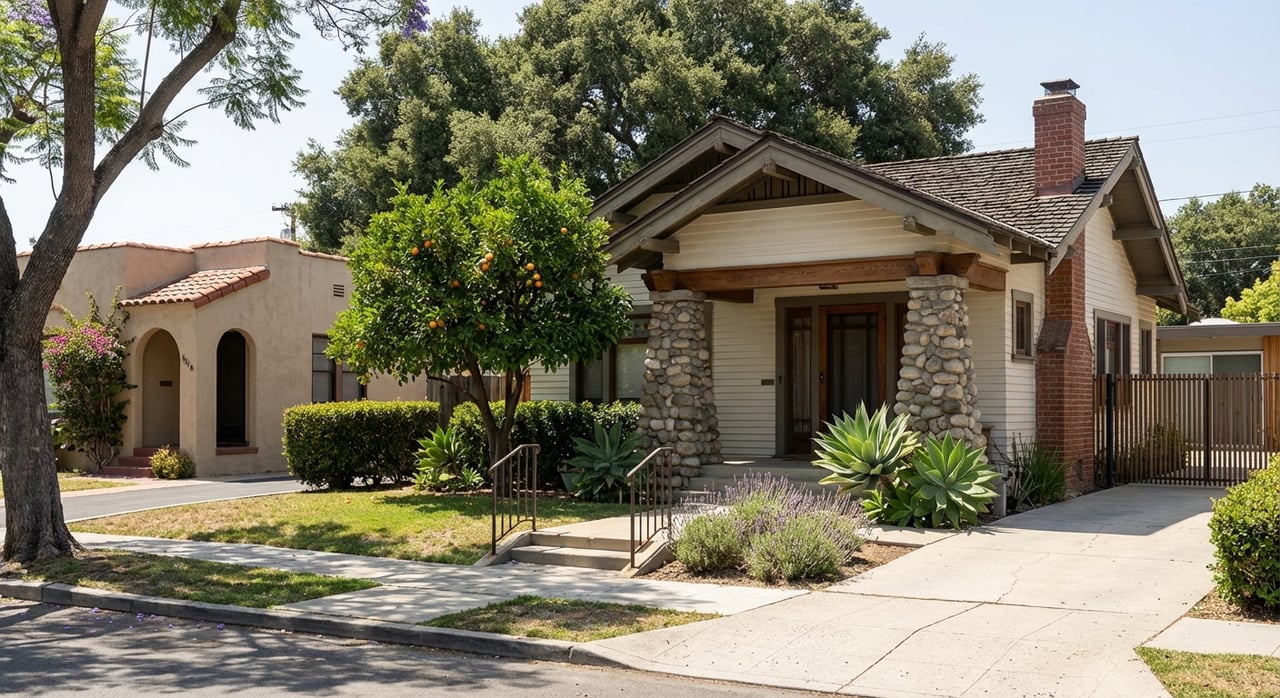
Pasadena is a national draw for Arts and Crafts and early 20th-century architecture. The Bungalow Heaven Historic District showcases one of the strongest concentrations of intact Craftsman bungalows in the country, and it is listed on the National Register of Historic Places. You can explore its significance through the state’s summary for the Bungalow Heaven Historic District. Pasadena also hosts marquee works by Greene and Greene, including the Gamble House, which anchors the city’s reputation for design excellence.
Neighborhoods range from cozy bungalow streets to grander corridors near the Arroyo. You will find a spectrum of Spanish Colonial and Tudor Revival homes as well, with many blocks that have remained visually consistent for over a century.
Glendale’s period-revival pockets
Glendale offers multiple early 20th-century neighborhoods with tree-lined streets and period detail. Areas like Casa Verdugo and Rossmoyne feature Craftsman, Spanish Colonial Revival, and Tudor homes that feel classic but accessible. For a feel of the local fabric, browse the Glendale Historical Society’s overview of Casa Verdugo.
Glendale’s historic streets often read a touch denser than some Pasadena pockets, which can create a lively neighborhood rhythm. You will also see Mid-Century moments in foothill and valley-adjacent areas, giving you a wider stylistic palette if you like both prewar and midcentury lines.
Preservation, review, and Mills Act incentives
Pasadena: clear rules and active incentives
Pasadena maintains a Historic Preservation Commission and a well-defined review process that protects neighborhood character. If a property is designated or in a local landmark district, exterior changes usually require a Certificate of Appropriateness. The city also offers a Mills Act program, which can lower property taxes for owners of qualifying historic resources who commit to approved preservation work. Learn more about Pasadena’s programs on the city’s page for historic preservation incentives.
What this means for you: you gain confidence that the streetscape will stay consistent, and you may access real tax savings if your home qualifies. You should also budget extra time for design review if you plan exterior work.
Glendale: owner-consent register and Mills Act access
Glendale operates its own Register of Historic Resources, with an owner-consent nomination process. Designation triggers review for exterior work and opens the door to Mills Act contracts for eligible properties. You can review eligibility and process details on the city’s page for the Glendale Register of Historic Resources.
What this means for you: you get a structured path to preserve architectural integrity and a potential property-tax benefit through a Mills Act contract. As in Pasadena, plan for design review on designated properties.
Prices and lot patterns at a glance
- Citywide medians as of early 2026 suggest Pasadena is priced higher on average than Glendale. Keep in mind that historic homes in top districts often sell above city medians based on condition, architecture, and lot size.
- Pasadena’s historic streets commonly feature small to mid-size bungalow lots, often in the 5,000 to 8,500 square foot range, with larger estates near the Arroyo and along key boulevards.
- Glendale’s historic pockets often deliver classic period homes on similarly sized lots. Some blocks trend a bit denser, which can mean closer neighborhood connections and fewer oversized parcels.
- If you want very large lots, your best bets nearby are often in Altadena. That said, this comparison focuses on Pasadena and Glendale, where you will mostly see conventional early 20th-century parcels.
Bottom line: you can find character homes in both cities. Pasadena often commands a premium in certain landmark districts or for architect-significant properties. Glendale offers price variety across neighborhoods, with historic pockets that can be more approachable depending on street and condition.
Commute and transit tradeoffs
Pasadena: A Line convenience
Pasadena is served by multiple Metro A Line stations that run to Downtown Los Angeles, with stops including Sierra Madre Villa, Allen, Lake, Memorial Park, Del Mar, and Fillmore. If you value a predictable rail commute, these stations are a real asset. See the list of stations and event travel tips on Metro’s page about A Line access in Pasadena.
Glendale: Metrolink and freeway access
Glendale’s Transportation Center hosts Metrolink and Amtrak service and connects to local bus lines, including the Glendale Beeline. For commuters heading to Burbank, downtown, or the Valley, this hub can simplify your routine. Explore the Glendale Transportation Center for an overview.
Both cities also offer multiple freeway options. Typical mean travel times are under 30 minutes according to census estimates, but your mileage will vary by corridor and time of day.
Schools at a glance
- Pasadena is served by the Pasadena Unified School District, which offers magnet and specialized programs. Always verify attendance boundaries for a specific property and review programs of interest on the PUSD website.
- Glendale is served by Glendale Unified, which operates magnet and dual-immersion programs. Check assignment and program details on the GUSD website.
Use neutral, property-level research to confirm the right fit for your household. Program availability and boundaries can change.
Renovation realities for older homes
Historic homes reward you with craftsmanship and character, yet they often need thoughtful upgrades. Common items include electrical and plumbing modernization, roof and foundation work, and careful window or exterior restoration to meet preservation guidelines.
- Structural safety: Many pre-1950 wood-frame homes benefit from seismic anchoring and cripple-wall bracing. California’s Residential Mitigation Program offers resources and grants for eligible properties. Review program basics and typical retrofit scopes in the CRMP FAQs.
- Permitting and design review: On designated properties, exterior changes that are visible from the street usually need review. Interiors are often more flexible but still subject to building permits for structural work. Early conversations with city staff help you avoid missteps.
- Budgeting: Period-appropriate repairs can cost more than standard replacements. A solid inspection team and contractor with historic-home experience will help you set realistic timelines and budgets.
Pasadena vs Glendale: which one fits you
Consider these quick profiles to clarify your path:
- Choose Pasadena if you want the densest concentration of Craftsman bungalows, marquee architectural pedigree, and a deep preservation framework. The A Line can streamline a rail commute to downtown.
- Choose Glendale if you want classic period-revival neighborhoods with price variety, plus the flexibility of Metrolink for commutes to Burbank, downtown, or the Valley.
Both cities deliver beautiful streetscapes, strong preservation tools, and homes with lasting appeal. Your best choice comes down to the lifestyle you want, the commute you prefer, and whether you prioritize grand architectural names or a slightly broader price spectrum across historic pockets.
How to shop smart for a historic home
Use this step-by-step approach to protect your budget and timeline:
- Confirm designation status. Ask your agent to check city registers and local maps. For Pasadena, start with historic preservation incentives. For Glendale, review the Register of Historic Resources.
- Plan for review. If the home is designated or in a district, assume exterior work will need a Certificate of Appropriateness. Build review time into your project plan.
- Evaluate structure early. Order a foundation and seismic assessment on any pre-1950 home. Use the CRMP FAQs to understand typical retrofit scopes and grant options.
- Budget for period-appropriate work. Allow contingency for millwork, windows, and exterior restoration that preserves historic character.
- Think commute first. If rail access is important, map your daily trip to the nearest A Line station or the Glendale Transportation Center before you write an offer.
- Verify school assignment. Confirm the specific property’s schools through PUSD or GUSD and review relevant programs.
Ready to tour Pasadena and Glendale through a historic-home lens or run the numbers on a potential Mills Act opportunity? Reach out to John Kostrey for a personalized plan, from neighborhood shortlists to contractor introductions and offer strategy.
FAQs
How do Pasadena and Glendale historic rules affect exterior changes?
- In both cities, designated landmarks or homes in local districts usually require a Certificate of Appropriateness for exterior work that is visible from the street. See Pasadena’s preservation incentives and the Glendale Register for guidance.
Are Mills Act tax savings available in both Pasadena and Glendale?
- Yes. Each city offers Mills Act contracts for eligible designated properties, which can reduce property taxes in exchange for approved preservation work. Review Pasadena’s program details and Glendale’s Register page for eligibility and process.
What price range should I expect for historic homes in Pasadena vs Glendale?
- Citywide medians show Pasadena above Glendale on average, but historic homes often sell above their city medians based on district, architecture, lot size, and condition. Your agent can pull recent comps filtered by year built and designation.
How do commute options differ between Pasadena and Glendale?
- Pasadena benefits from multiple Metro A Line stations for direct rail access to downtown Los Angeles, while Glendale offers Metrolink and Amtrak service at its Transportation Center and robust bus connections.
How can I assess earthquake retrofit needs on an older home?
- Have a licensed structural engineer inspect the foundation and framing, then price common brace-and-bolt upgrades. Use the CRMP FAQs to understand typical scopes and potential grant support.