If you are drawn to homes with real character, Los Feliz and Atwater Village deserve a closer look. These neighboring parts of Los Angeles offer very different architectural experiences, from custom hillside houses and intact Period Revival streets to modest 1920s bungalows and even a distinct equestrian pocket. If you are trying to narrow your search by style, this guide will help you understand where to look, what details to notice, and what can shape long-term value. Let’s dive in.
Why Los Feliz and Atwater stand out
Los Feliz reads less like one uniform neighborhood and more like a group of smaller districts with different architectural identities. The Los Feliz Neighborhood Council identifies subareas such as Los Feliz Hills, Los Feliz Square, Los Feliz Village, Los Feliz Knolls, Franklin Hills, and West Los Feliz, while the Hollywood Grove Preservation Plan describes a strong mix of Tudor Revival, English Revival, American Colonial Revival, Spanish Colonial Revival, Mediterranean Revival, Mission Revival, Craftsman, and Modernist design.
Atwater Village developed on a different timeline. According to a City Planning survey report, much of the area was still wildflower fields and small farms in the early 1900s before rapid subdivision after 1912. By the mid-1920s, most residential areas had been platted, and much of the surviving housing stock was built for working-class families in revival styles.
Los Feliz architecture by pocket
Hollywood Grove and Canyon Drive
If you want the clearest concentration of older architectural fabric, start here. The Hollywood Grove HPOZ plan notes that this area has some of Los Feliz’s strongest Period Revival character, with Canyon Drive holding one of the neighborhood’s best concentrations of Craftsman homes.
This is also where you will notice how much siting matters. North of Los Feliz Boulevard, the preservation plan says homes often read as more custom, more substantial, and more view-oriented. For buyers, that usually means architecture and setting work together, not separately.
Franklin Hills
Franklin Hills offers a different kind of appeal. The Los Feliz Neighborhood Council describes it as a hillside area with varied architecture, including some of the finest mid-century modern homes in Los Angeles, along with narrow winding streets and stairways built in the 1920s.
If you are looking for a home where topography is part of the experience, this pocket often feels more eclectic and more modern. It can be especially appealing if you care about hillside views, stair-street character, and architecture that responds to the slope.
Landmark hillside streets
Los Feliz has a reputation that goes beyond everyday curb appeal. Major landmarks like Hollyhock House, the Samuel-Novarro Residence, and the Ennis House help explain why buyers here often pay attention to architect names, design lineage, and provenance.
Even if you are not buying a landmark property, that context matters. In some parts of Los Feliz, architectural identity is part of how buyers assess rarity and long-term appeal.
Atwater Village architecture by pocket
Edenhurst and nearby blocks
If you want the strongest style mix in Atwater Village, focus on the north side of the neighborhood. A Los Angeles Times neighborhood guide points to Edenhurst Avenue for a mix of Mid-Century Modern, Craftsman, and Spanish-style homes, and notes that Atwater has more pre-1939 homes than any other Los Angeles neighborhood.
That mix gives buyers a broader menu than they might expect. Instead of one dominant look, you may find a street where modest Spanish homes, bungalows, and later modern houses sit within a few blocks of each other.
South of Chevy Chase Drive
This part of Atwater is important because it offers a very different historic setting. The city identifies the Atwater Village Equestrian Historic District as a defined area south of Chevy Chase Drive with private dirt roads, river access, and bridle-trail connections.
For buyers, the appeal here is not just architectural style. The historic landscape itself is part of the experience, so the area can feel more pastoral and low-density than the classic bungalow grid found elsewhere in the neighborhood.
Los Feliz and Glendale boulevard corridors
These corridors help explain how Atwater functions day to day. They connect residential blocks with neighborhood-serving commercial uses, and they also hold one of the area’s best-known architectural landmarks, the Tam O’Shanter.
Built in 1922 and designed by Harry Oliver, the Tam O’Shanter is a well-known Storybook example. It is a useful reference point if you are trying to train your eye for more whimsical historic design in the area.
The styles you are most likely to see
Spanish Colonial Revival
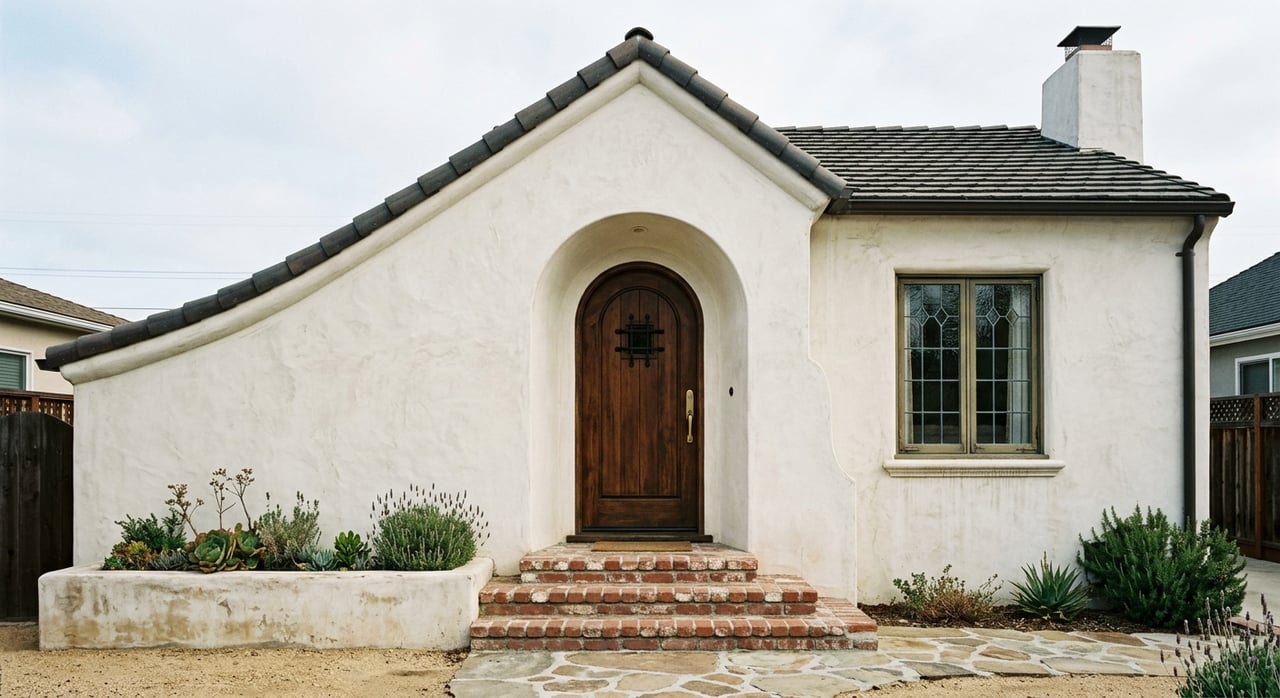
This is one of the baseline styles you will see again and again in both neighborhoods. Los Angeles City Planning describes the style as one of Southern California’s most influential, often defined by light stucco walls, low-sloped red tile roofs, asymmetrical massing, and wrought-iron details in its architectural guidance.
In Los Feliz, Spanish Colonial Revival often appears in more custom and substantial forms. In Atwater Village, it often shows up as a more modest tract version from the 1920s and 1930s.
Storybook and Tudor Revival
If a home looks a little like it belongs in a fairy tale, you may be looking at Storybook design. Los Angeles City Planning describes Storybook as a whimsical variation on Tudor Revival, often featuring rolled eaves, tall narrow windows, half-timbering, and handmade-looking details in its Village Court article.
This style appears in both neighborhoods, though often in smaller doses than Spanish or Craftsman homes. It tends to stand out quickly online because the details are so visually specific.
Craftsman and bungalow forms
Craftsman homes are central to the Eastside look. The National Park Service describes Craftsman bungalows as low or one-and-a-half-story homes with broad eaves, exposed rafters, deep front porches, and tapered porch supports on brick pedestals.
In Los Feliz, Canyon Drive is one of the strongest places to look for this style. In Atwater Village, Craftsman and bungalow forms are part of the early residential fabric, often in simpler, more modest versions.
Mid-Century Modern
If your search leans modern, Franklin Hills is one of the most useful areas to watch. Mid-century modern design is often identified by horizontal lines, flat roofs, bands of windows, and glass-heavy entries, as described by the Los Feliz Neighborhood Council’s discussion of Franklin Hills and the broader architectural context there.
You may also spot mid-century homes in Atwater Village, especially around the north side and Edenhurst Avenue. These houses can feel very different from the revival homes nearby, even when they share the same block.
What to notice on a buyers tour
When you tour architecture-focused neighborhoods, style is only part of the picture. What often matters more is architectural integrity, meaning how much of the original design still reads clearly.
As you look through listings or walk a property, pay attention to:
- Original roof form
- Porch proportions
- Windows and window patterns
- Stucco, tile, and wood details
- Built-ins and trim
- Whether additions respect the home’s original massing
- How the house sits on the lot, especially on hillside sites
In Los Feliz and Atwater Village, intact details can carry real weight with design-conscious buyers. Even when interiors are updated, original exterior character and strong siting can still shape how a home is perceived.
Why preservation rules matter
If you are buying in a historic district, remodel flexibility may not be as simple as it looks. Los Angeles City Planning explains that HPOZs and local historic districts add a review layer for exterior work, including landscaping, paint, additions, and new construction.
That does not mean you should avoid these homes. It simply means you should verify what is allowed before making assumptions about changes you want to make.
A good first step is to review ZIMAS and the relevant preservation plan for the property. This is especially important in Hollywood Grove and any other designated historic district, where even smaller exterior updates may require city review.
How architecture can affect value
There is no single formula, but architecture can shape value in very real ways. Homes with strong original character, notable architect associations, historic designation, rare styles, or especially strong siting may attract a narrower yet more design-focused buyer pool.
That can support demand, but it can also come with tradeoffs. A home with landmark status or district oversight may feel more special to the right buyer while also offering less freedom for exterior changes.
In practical terms, the most desirable homes in these neighborhoods often combine three things:
- Recognizable architectural character
- A setting that enhances the design, such as views or a distinct streetscape
- Enough integrity that the home still feels true to its original intent
How to narrow your search
If you want to search with more focus, this simple framework can help:
| If you want... | Start here |
|---|---|
| Period Revival streetscapes | Hollywood Grove in Los Feliz |
| Strong Craftsman concentration | Canyon Drive in Los Feliz |
| Hillside modern homes | Franklin Hills |
| Architect-signature reputation | Streets near Olive Hill, Valley Oak, and Glendower |
| Mixed historic housing stock | Edenhurst and north Atwater blocks |
| A pastoral historic setting | South of Chevy Chase Drive |
The more specific you are about style, setting, and renovation tolerance, the easier it becomes to identify the right pocket. In neighborhoods this layered, micro-location can matter as much as square footage.
If you are exploring Los Feliz or Atwater Village and want help matching architectural style to your budget, goals, and renovation plans, John Kostrey can help you approach the search with local insight and clear strategy.
FAQs
Which Los Feliz area is best for Craftsman homes?
- Canyon Drive is one of the strongest concentrations of Craftsman homes in Los Feliz, according to the Hollywood Grove Preservation Plan.
Which Atwater Village blocks have the most architectural variety?
- The north side of Atwater Village, especially around Edenhurst Avenue, is noted for a mix of Mid-Century Modern, Craftsman, and Spanish-style homes.
What architectural style is most common in Los Feliz and Atwater Village?
- Spanish Colonial Revival is one of the most common styles buyers will encounter in both neighborhoods.
What should buyers check before remodeling a historic home in Los Feliz?
- Buyers should review ZIMAS and the relevant preservation plan because homes in historic districts may be subject to exterior design review.
What details help identify a Craftsman bungalow in Los Feliz or Atwater Village?
- Look for broad overhanging eaves, exposed rafters, deep front porches, and tapered porch supports.
Why does architectural integrity matter when buying in Los Feliz or Atwater Village?
- Homes that retain original details, massing, and materials often appeal more strongly to design-conscious buyers and can play differently in the market.