Love old houses, layered streetscapes, and the kind of neighborhood walk where every block reveals a different era? Mid-City and West Adams offer one of Los Angeles’ richest architecture corridors, with Craftsman bungalows, Spanish Revival homes, elegant period houses, and sleek early modern buildings all woven together. If you want to understand what you’re seeing, where to look, and what it means for buying in these neighborhoods, this guide will help you read the architecture with more confidence. Let’s dive in.
Why Mid-City and West Adams Feel So Layered
Mid-City and West Adams are best understood as a corridor rather than a single, uniform district. Los Angeles Planning places this area across both the Wilshire Community Plan and the West Adams-Baldwin Hills-Leimert Community Plan, which helps explain why the architectural character shifts so much from pocket to pocket.
Much of the corridor grew as a streetcar and downtown-commuter landscape, then filled in rapidly from the 1920s through the 1940s. That development pattern left behind a mix of bungalows, revival houses, courtyard apartments, and later modern infill, often within just a few blocks of each other.
For architecture lovers, that variety is the draw. For buyers, it also means each micro-area has its own feel, preservation context, and housing mix.
Craftsman Architecture to Notice
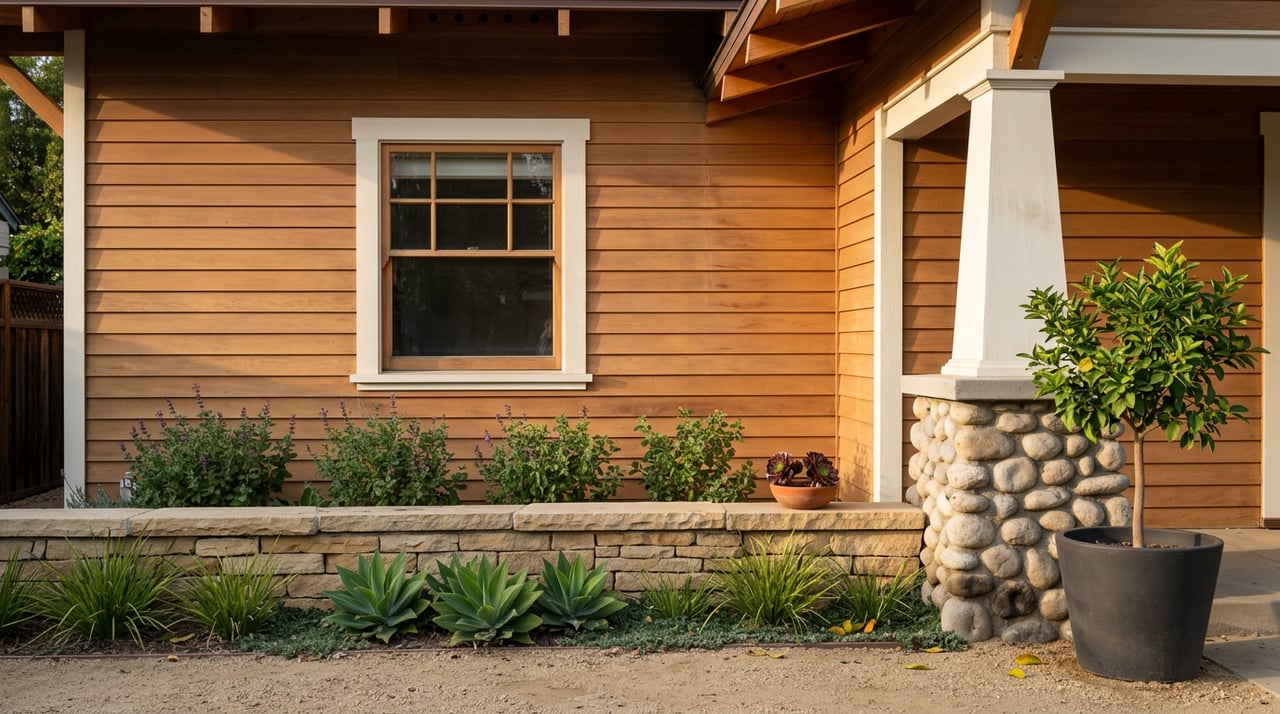
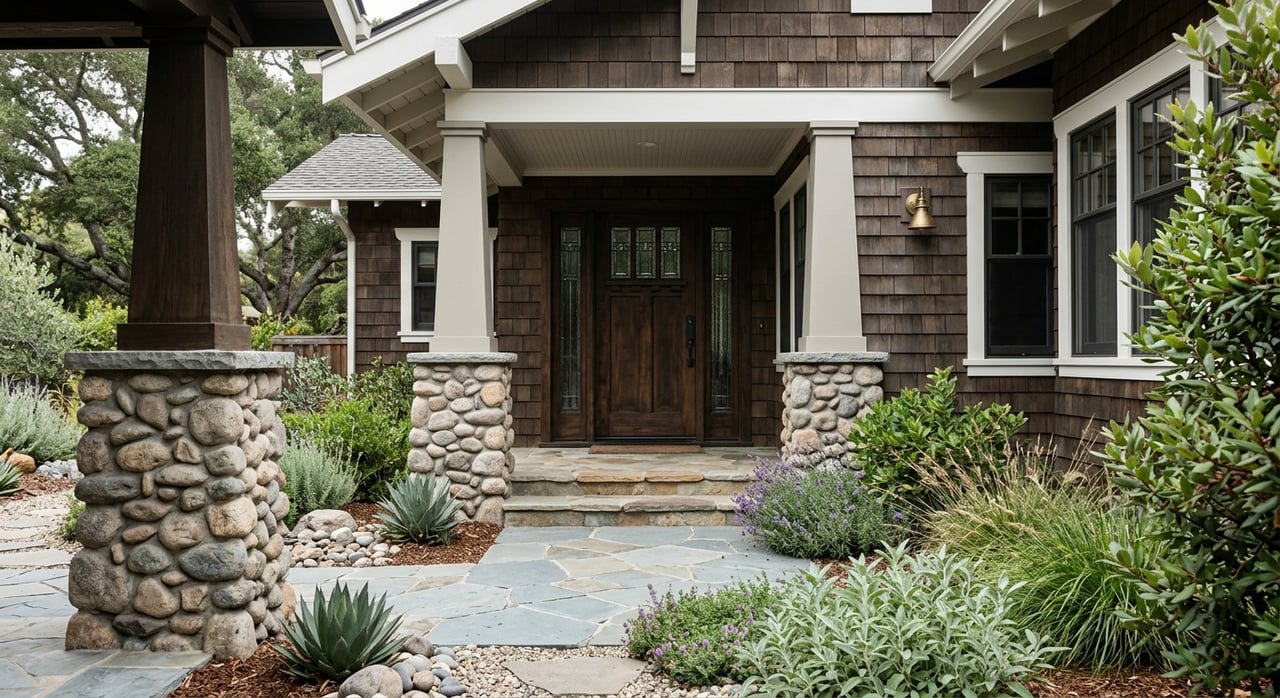
Craftsman and Arts and Crafts homes are some of the most recognizable historic properties in this part of Los Angeles. They are defined by a focus on workmanship, simplicity, and a strong connection to the site.
When you are walking the neighborhood, look for these details:
- Low-pitched gabled roofs
- Deep overhanging eaves
- Broad front porches
- Exposed rafters or beams
- Grouped windows
- Wood trim
- Stone or masonry chimneys
These homes often feel especially warm and grounded from the street. Even modest examples can have a lot of presence because the detailing does so much of the visual work.
Where to See Craftsman Homes
Harvard Heights
Harvard Heights is one of the strongest places to understand the Craftsman story in concentrated form. The neighborhood is known for predominantly two-story Craftsman homes built from 1902 to 1908, and it includes the city’s only existing Greene and Greene-designed house.
If you enjoy early 20th-century residential design with strong proportions and substantial wood detailing, this is an essential stop. It gives you a clear sense of how refined and ambitious Craftsman architecture could be in Los Angeles.
Jefferson Park
Jefferson Park offers a different but equally compelling version of the style. It is one of the city’s clearest early streetcar suburbs, and its housing stock includes many simple, elegant single-story bungalows with strong Arts and Crafts character.
This is a great area to notice how accessible and livable Craftsman design can feel. Many homes have a relaxed scale, practical layouts, and visual details that still make them distinctive more than a century later.
Adams-Normandie
Adams-Normandie helps tell the transition story from late Victorian architecture into Arts and Crafts design. The district includes notable groupings of Shingle and Craftsman residences, plus the Van Buren Place historic district.
For buyers and design-minded readers, this area shows how architectural styles do not change all at once. Instead, neighborhoods often carry overlapping design ideas, which is part of what makes this corridor so visually interesting.
Spanish Revival and Mediterranean Style
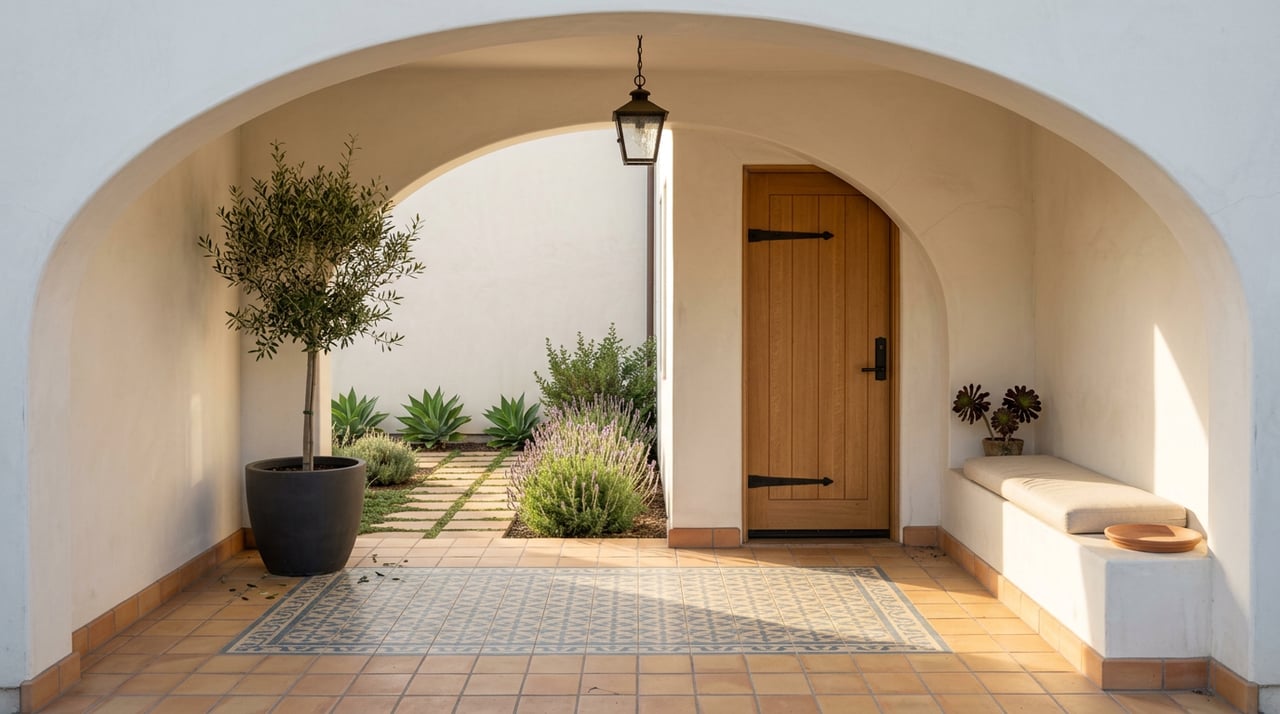
If Craftsman homes feel earthy and handcrafted, Spanish Colonial Revival and Mediterranean Revival homes often feel more sculptural and romantic. In Los Angeles, these styles are often discussed together because neighborhoods frequently blend them.
The easiest visual cues include:
- Stucco or plaster exterior walls
- Clay tile roofs
- Arches
- Recessed openings
- Decorative ironwork
- Patios or courtyards
- Decorative tile or plaster details
These houses often create a strong indoor-outdoor impression even from the sidewalk. Their forms, materials, and details tend to emphasize texture, shade, and outdoor living space.
Where to See Revival Homes
Country Club Park
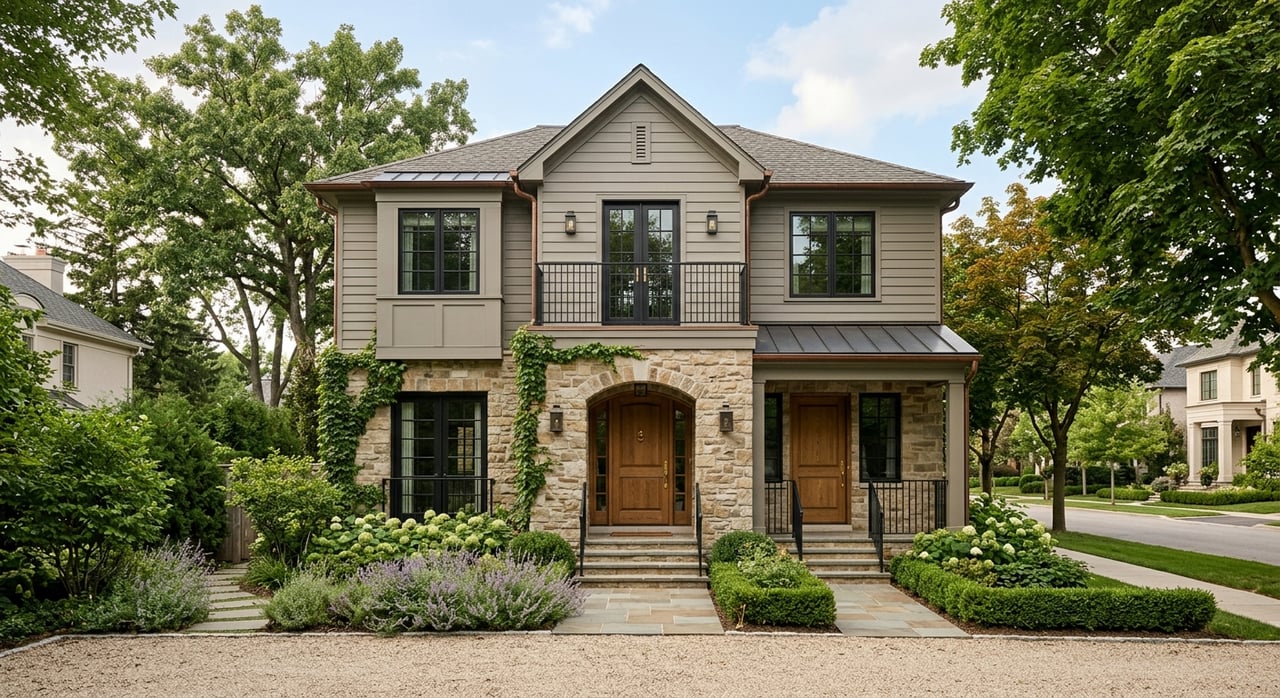
Country Club Park is one of the best places to see a polished mix of early 20th-century residential styles. The neighborhood includes Craftsman, Tudor Revival, Spanish Colonial Revival, Colonial Revival, and Mediterranean Revival homes.
For architecture lovers, this variety creates a highly detailed streetscape. For buyers, it can also mean more choice in how a historic home looks and lives, even within a relatively compact area.
Wilshire Park
Wilshire Park offers another strong concentration of period homes, including early Craftsman, Prairie, Mediterranean, Colonial Revival, and Spanish Colonial Revival properties. The neighborhood’s range shows how quickly Los Angeles residential design evolved in the early decades of the 20th century.
Walking here, you can often spot the shift from simpler early forms to more stylized and expressive revival architecture. It is a useful place to compare rooflines, window patterns, and facade detailing.
West Adams Terrace and Western Heights
West Adams Terrace and Western Heights are especially useful if you want to see larger homes and a broader range of designer influence. West Adams Terrace includes modest cottages as well as Craftsman, Mission Revival, Period Revival, and Classical-style houses by architects such as Frank Tyler, Hunt and Burns, Frank Meline, and Paul R. Williams.
Western Heights adds Queen Anne, Craftsman, Tudor Revival, and Spanish Colonial Revival homes, with Streamline Moderne visible nearby on Washington Boulevard. Together, these areas show just how layered the West Adams corridor can be.
Art Deco, Streamline Moderne, and Early Modern
Not every memorable building in Mid-City and West Adams is ornate or historic in the same way. The corridor also includes sleeker interwar and early modern forms that feel like a visual counterpoint to the revival houses.
Look for these features:
- Smooth wall surfaces
- Geometric ornament
- Flat or low-pitched roofs
- Minimal exterior decoration
- Strong emphasis on massing over trim
In Los Angeles, Art Deco is more often associated with commercial and institutional buildings, while residential examples tend to appear in apartment houses and a smaller number of single-family homes. Minimal Traditional also helps bridge the gap between revival styles and modern forms.
Where to Spot Early Modern Layers
Miracle Mile
Miracle Mile is one of the corridor’s most useful places for seeing how residential patterns changed over time. North of Olympic, the area includes many one-story houses, while south of Olympic there are one- and two-story multifamily buildings, including Period Revival examples and some Mid-Century Modern apartment buildings.
That mix makes Miracle Mile especially interesting if you like reading the city block by block. It captures the shift from earlier detached homes to later multifamily and modern residential forms.
Sugar Hill and West Adams Heights
Sugar Hill, also known as West Adams Heights, gives you a grander version of the story. The area includes large early 20th-century houses in styles such as Richardsonian Romanesque, Craftsman, Mediterranean Revival, Neoclassical, and Colonial Revival, along with mid-century apartment houses.
This is where the architecture can feel especially layered and ambitious. If you are drawn to neighborhoods where one era does not fully replace another, Sugar Hill is worth close attention.
Lafayette Square
Lafayette Square adds even more depth, with Craftsman, Italianate, Spanish Colonial Revival, American Colonial Revival, and several Modern houses. It also includes Paul Williams’ own home, which adds another level of architectural significance to the area.
For buyers who care about design lineage, Lafayette Square is a reminder that architectural interest in Los Angeles is not confined to one style. Some of the most compelling neighborhoods are the ones that hold several design traditions at once.
How to Read the Neighborhood as a Buyer
If you are shopping in Mid-City or West Adams, architectural style is not just a matter of taste. It can affect maintenance priorities, renovation options, and the approval process for exterior changes.
Many neighborhoods in this corridor are protected through HPOZs, the city’s local historic district program. Each district has a preservation plan, a boundary map, and board review for proposed work, so exterior updates may be part of a preservation framework rather than a purely personal design decision.
What That Means in Practice
For Craftsman homes, original porches, wood trim, and window patterns often define the house’s character. In general, preserving existing details and repairing original materials where possible helps maintain both architectural integrity and neighborhood context.
For Spanish Colonial Revival and Mediterranean Revival homes, stucco texture, clay tile roofs, arches, and ironwork are central to the look. Keeping exterior materials and finishes visually consistent is usually one of the most important parts of preserving the style.
For Art Deco, Streamline Moderne, and early modern buildings, the main concern is often protecting the clean lines. Generic replacement materials or changes to rooflines, windows, and wall surfaces can flatten the building’s character.
Why This Corridor Appeals to Design-Minded Buyers
Mid-City and West Adams reward buyers who want more than square footage. These neighborhoods offer architectural range, visible history, and streets where the built environment still tells a story.
They also offer options. You might be drawn to a bungalow in Jefferson Park, a larger revival home in Country Club Park, or a multifamily opportunity in a more layered stretch near Miracle Mile or West Adams.
The key is understanding that every pocket reads a little differently. When you know what to look for, you can match your taste, renovation comfort level, and long-term goals to the right micro-neighborhood.
If you are exploring architecturally significant homes in Mid-City, West Adams, or nearby Los Angeles neighborhoods, The Kostrey + Eckert Collection offers the local guidance and high-touch representation that can help you evaluate character, context, and opportunity with confidence.
FAQs
What architectural styles are common in Mid-City and West Adams?
- Mid-City and West Adams include Craftsman, Arts and Crafts, Spanish Colonial Revival, Mediterranean Revival, Tudor Revival, Colonial Revival, Art Deco, Streamline Moderne, Minimal Traditional, and other early modern forms.
Where can you see Craftsman homes in Mid-City and West Adams?
- Harvard Heights, Jefferson Park, Adams-Normandie, and the broader West Adams area are some of the strongest places to see Craftsman and Arts and Crafts homes.
What makes Jefferson Park important for architecture lovers?
- Jefferson Park is one of Los Angeles’ clearest early streetcar suburbs and is known for simple, elegant bungalows, frequent kit-house origins, and strong Arts and Crafts character.
What should buyers know about historic districts in West Adams and Mid-City?
- Many neighborhoods in this corridor are protected through HPOZs, which means exterior changes may be reviewed under a preservation plan rather than handled as a matter of preference alone.
Where can you find Spanish Colonial Revival homes in this part of Los Angeles?
- Country Club Park, Wilshire Park, Miracle Mile, and West Adams Terrace are all strong places to spot Spanish Colonial Revival and Mediterranean Revival homes.
What should buyers look for when maintaining a historic home in Mid-City or West Adams?
- A good rule of thumb is to preserve original trim, respect roof and window profiles, and avoid overly generic replacement materials that erase the home’s defining character.